





Accelerate healing with electricity
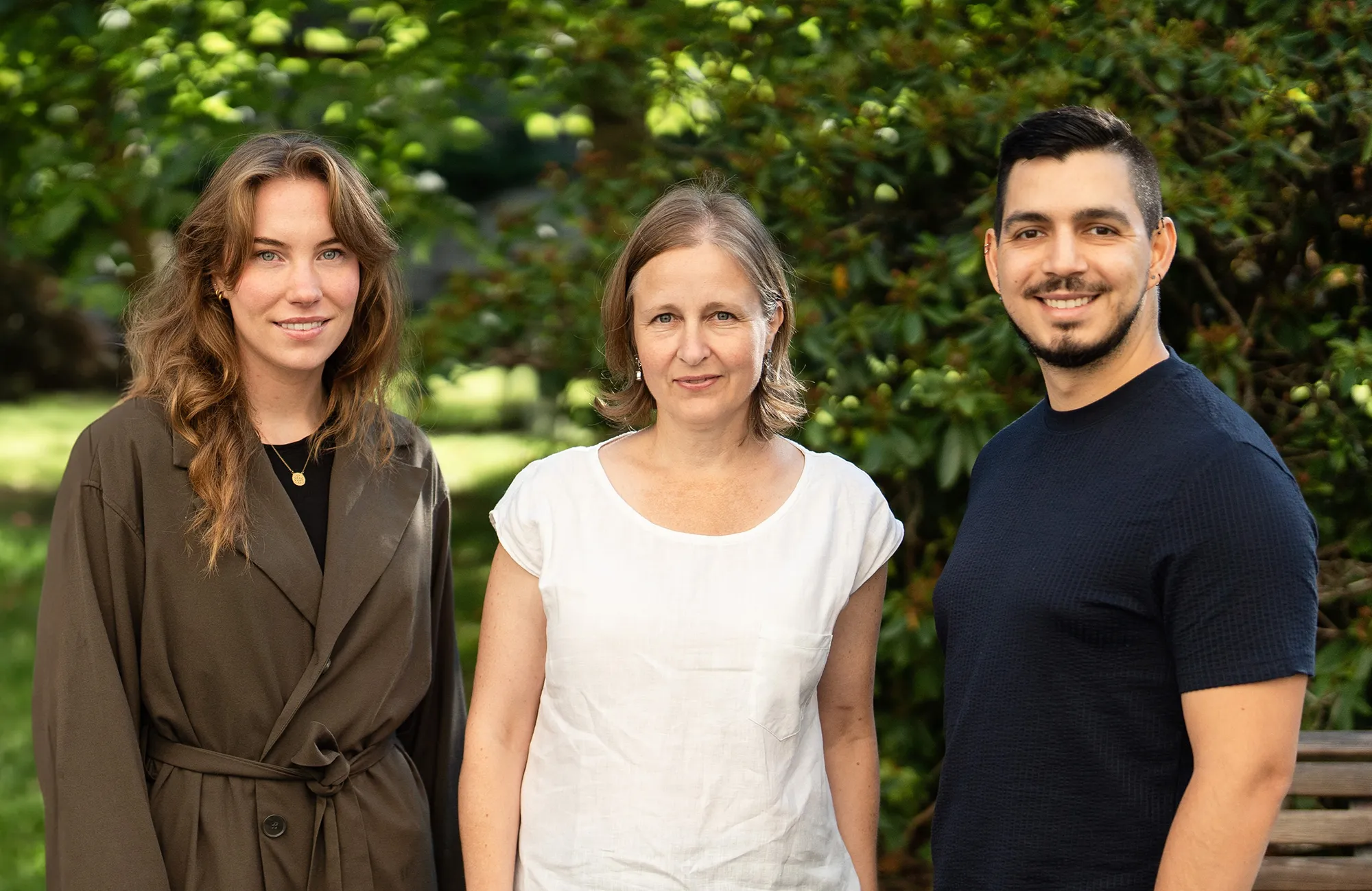
In the world of research, it has been known for decades that cells can be induced to migrate by the application of small dc electric fields. It has also been known that natural electrical signals arise immediately after tissue injury, acting as a guide for cells to repair damaged tissue. In 2017 Maria Asplund, then independent group leader at Albert Ludwig University of Freiburg, received a grant to research how to safely deliver electrical current into skin tissue to induce cell movement. Together with José Leal - now Postdoc in Electronics Material and Systems at Chalmers University of Technology and CTO at Bioelectrix - Maria Asplund started a research project that 2025 resulted in the Swedish medical technology startup Bioelectrix.
– For a long time, chronic wounds have been overlooked in the healthcare systems, despite that old age, obesity, and diabetes are making it worse. With a huge risk of ulcer and infection the situation can rapidly become life threatening if the patient’s wounds aren’t closed. During our research we realized the possibility of healing the wound with gentle direct current, says José Leal.
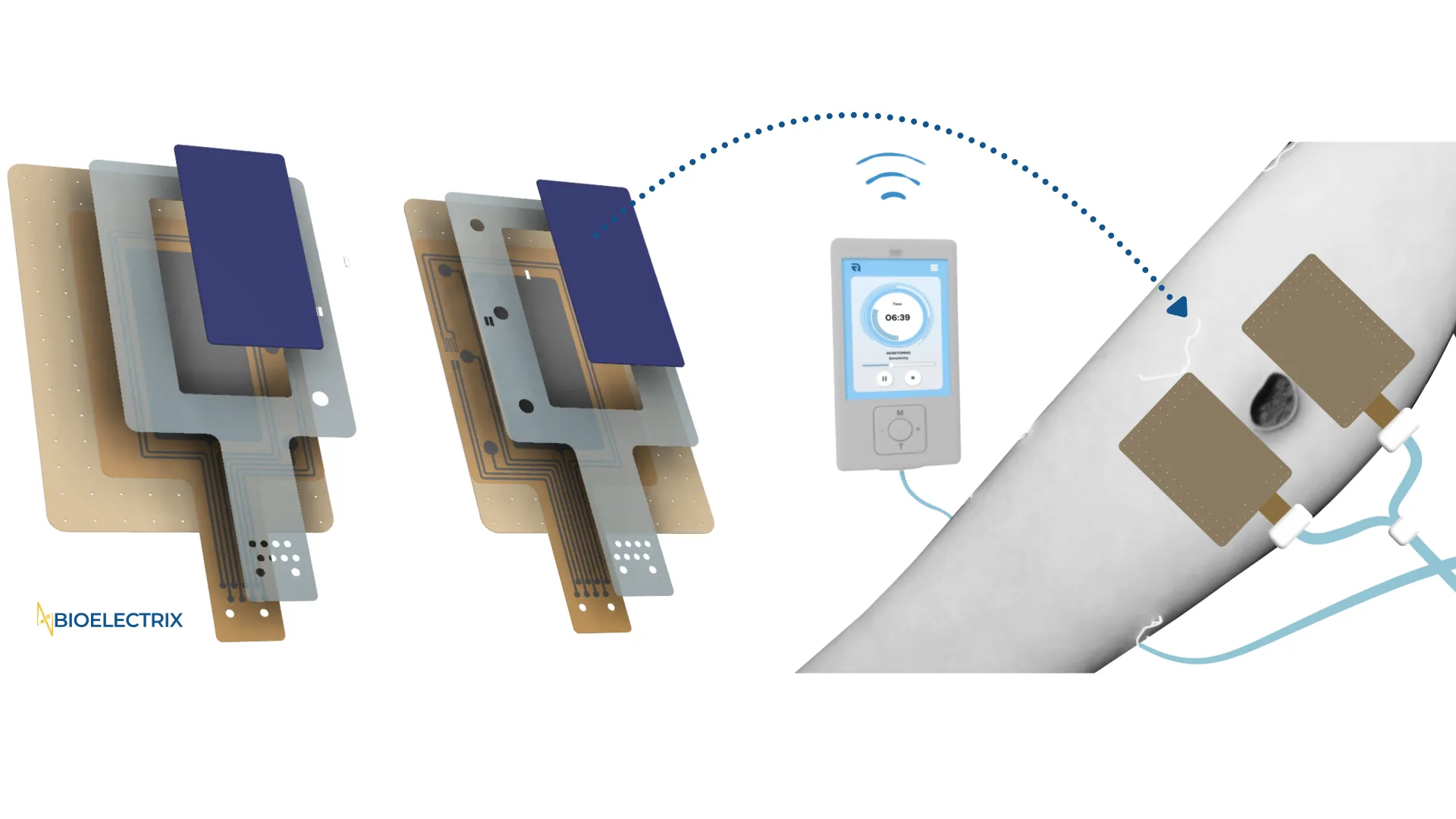
With a background from material science and electrostimulation for nerves and brain tissue, the duo was focused on overcoming the biggest hurdle when stimulating skin. For wounds to heal, long stimulation pulses are required, which are not attainable with conventional electrode materials.
– We spent a lot of time searching for materials that can actually deliver this long current stimulation without nasty reactions, and managed to find a nice combination of materials, based on laser induced graphene and conducting polymers.
Testing and studies
José Leal and Maria Asplund tested the technology in vitro. They did a lot of experiments characterising how the cells reacted and finally tested what would happen if you create an artificial wound with these cells on skin.
– When you get damaged, the upper layer of the skin is there to close the wound and then allow the layers underneath to remodel and make your skin elastic again. We created a model that simulates the closure of the upper skin layers in a microfluidic device and in all situations we applied the stimulation, these cells were able to do their job up to three times faster.
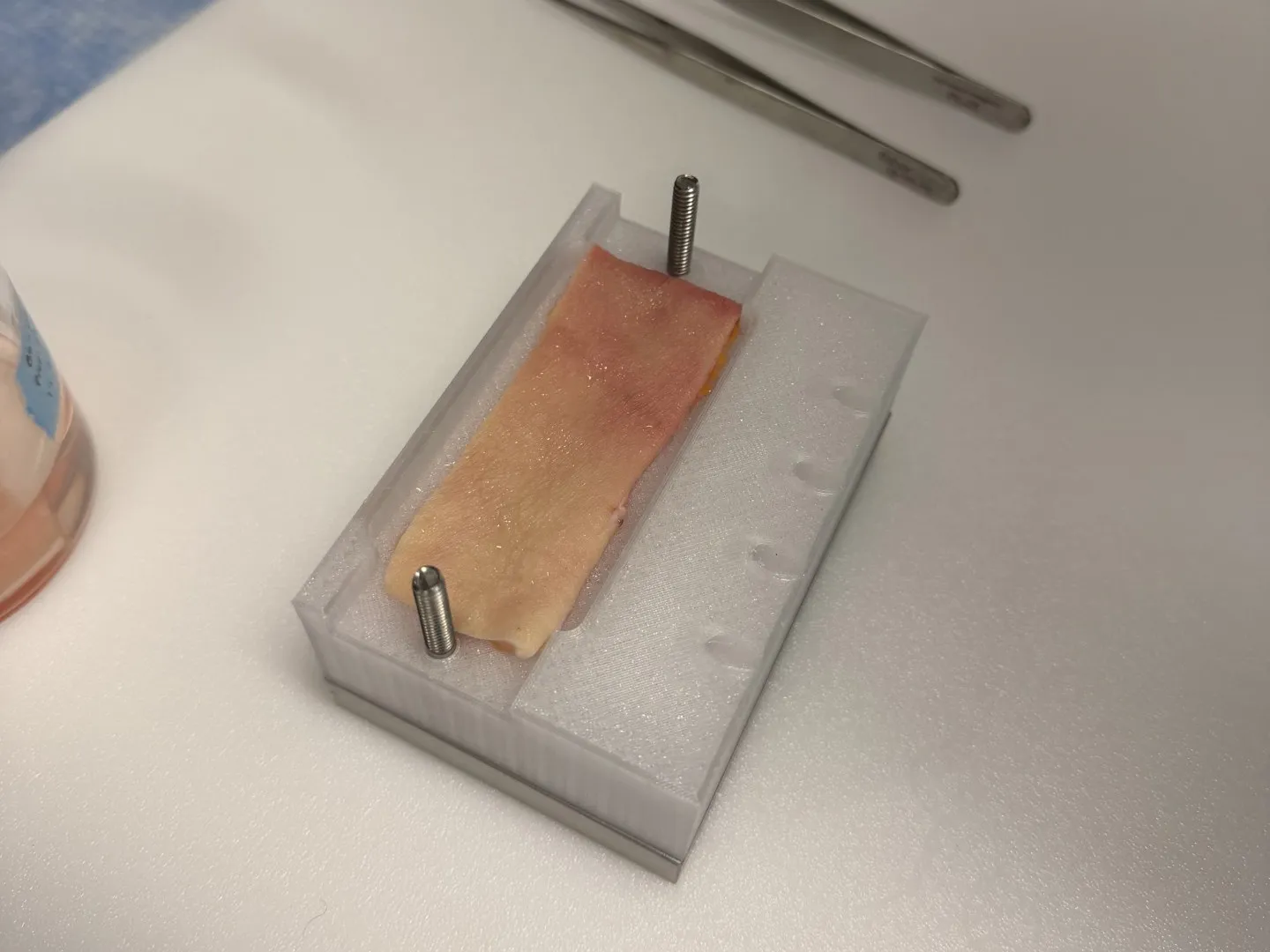
Together with a partner, Bioelectrix has conducted tests on how donated pieces of human skin reacts to therapy and in spring of 2026, the company has analysed the data from the first study.
– Next step is to do this process with diabetic skin and other types of donors to find a characterization of the dose that we need to deliver to the tissue in order for the stimulation to kick off the healing. We can finalize the product and set a design freeze, says Caroline Johansen, CEO and co-founder of Bioelectrix.
– Right now, we’re looking for new smart investors that have something to contribute to the company.